A Legacy of History: Eastwood House
With a history spanning nearly two centuries, Eastwood House was originally built in 1830 by John Murray, the 4th Duke of Atholl, as part of the prestigious Atholl Estates.
Eastwood House has been owned by just four families. It has played host to a fascinating array of distinguished guests, including John Everett Millais, David Lloyd George, Stanley Baldwin, William Ewart Gladstone, Winston Churchill, Lillie Langtry, and, most famously, Beatrix Potter.

John Everett Millais and Lilly Langtry in the garden of Eastwood. 1893

Picture of Eastwood House taken by Rupert Potter (Farther of Beatrix Potter). 1893
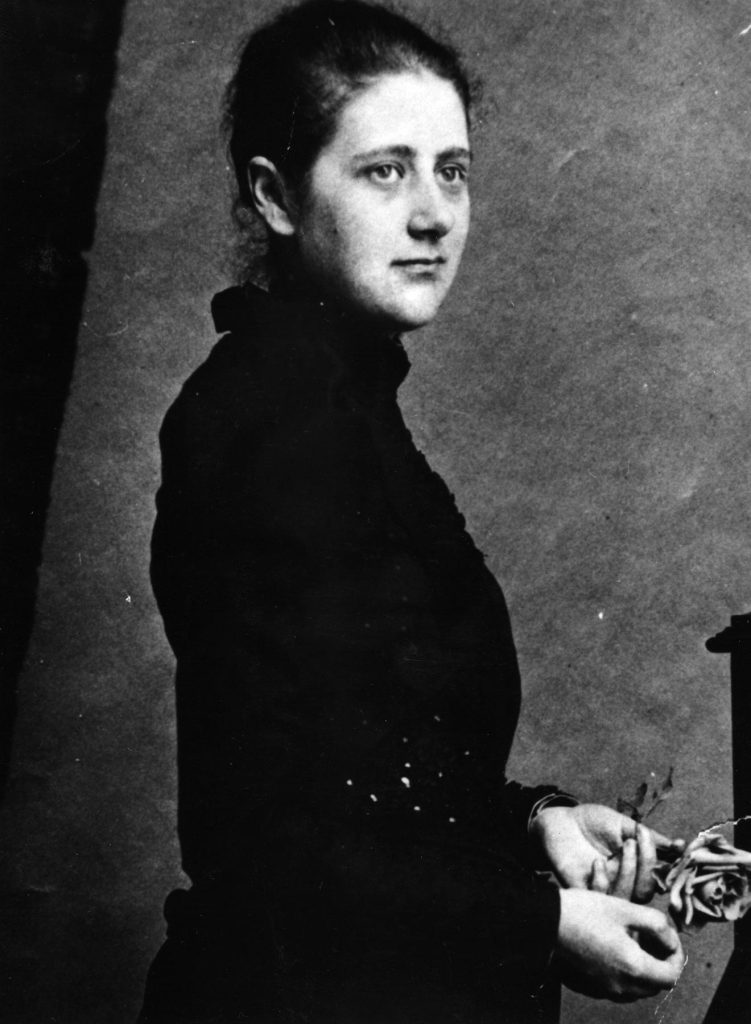
Beatrix Potter
Beatrix Potter
at Eastwood House
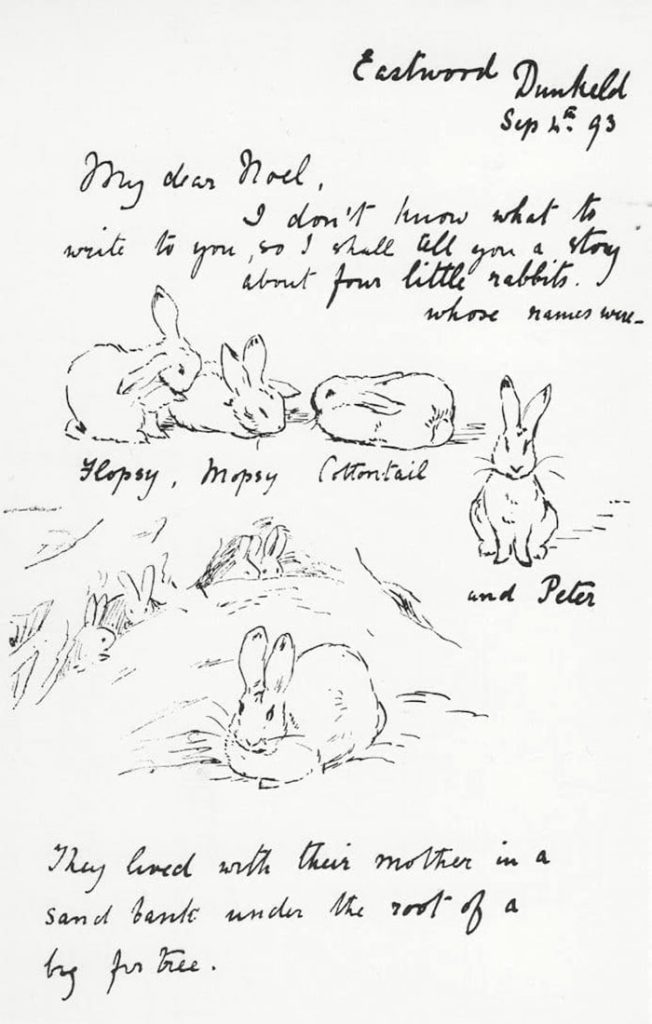
Eastwood House holds a unique place in literary history as the birthplace of Beatrix Potter’s The Tale of Peter Rabbit and The Tale of Jeremy Fisher. In 1893, while staying at Eastwood, Beatrix wrote a picture letter to Noel Moore, the young son of her governess, detailing the adventures of four little rabbits—Flopsy, Mopsy, Cottontail, and Peter. A decade later, this letter would evolve into one of the most beloved children’s books of all time, selling over 45 million copies worldwide.
The Scottish countryside profoundly influenced Beatrix’s work. Mr. McGregor, the farmer who famously chased Peter Rabbit from his garden, was named after Atholl McGregor, the laird who sublet Eastwood to the Potter family. His distinctive features—his thin face and white beard—were inspired by Charles McIntosh, the local postman and amateur naturalist, who became Beatrix’s mentor. Together, they spent hours discussing and sketching fungi, and today, 25 of her intricate illustrations are preserved at the Perth Museum and Art Gallery, just a short drive from Eastwood.
The letter story about Peter Rabbit Beatrix sent to Noel Moore, dated Eastwood House Sept 4th, 1893.
Katharine Marjory Stewart-Murray
The Red Duchess

Katharine Marjory Stewart-Murray
One of the most compelling figures associated with Eastwood House is Katharine Marjory Stewart-Murray, who became the 8th Duchess of Atholl in 1917 and became owner of Eastwood House. A pioneering politician and humanitarian, she was the first Scottish woman elected as a Member of Parliament, the first Conservative woman to hold a ministerial office, and an outspoken opponent of fascism in the lead-up to World War II.
During the Spanish Civil War, she defied her party by advocating for the Republican cause and working to aid Basque child refugees. She authored Searchlight on Spain, an early warning against the rise of fascism, and was among the first to recognize the threat posed by Hitler. Her activism extended beyond Spain, as she campaigned against appeasement and warned Britain of the Nazi threat.
Her steadfast principles ultimately led to her political downfall. Branded a communist and ostracized by the Conservative Party, she triggered a by-election in 1938, receiving support from figures like Winston Churchill and Sylvia Pankhurst. Despite her valiant campaign, she lost the seat, but her legacy as a fearless advocate for justice remained intact.
In 1937, she played a pivotal role in securing asylum for nearly 4,000 Basque child refugees fleeing the devastation of the Guernica bombing. Many of these children found temporary refuge at Eastwood House and Blair Castle, a testament to her unwavering commitment to humanitarian causes. She continued to work tirelessly for the displaced and oppressed until her death in 1960.
The Butter Family at Eastwood

Major Sir David Henry Butter
In 1946 Major Sir David Henry Butter, a descendent of ancient Scottish family, and Lady Myra Butter, who was cousin of Prince Philip’s, moved in right after their wedding.
Major Butter attended Eton and Oxford University but on the outbreak of war in 1939 he joined the 2nd Battalion of the Scots Guards and served with much distinction throughout the war. In the Western Desert campaign in North Africa, Major Butter commanded an anti-tank platoon and was wounded in action in June 1942. It was during this campaign that he was awarded the Military Cross. The citation spoke of his “exceptional zeal and ability” from August 1941 to July 1942. The citation continued: “He raised the platoon to a very high standard of efficiency. On June 13th his platoon, along with one motor platoon, was the only intact fighting unit. Lt Butter fought most gallantly in delaying actions against large numbers of enemy tanks despite having been wounded in the knee.” Also mentioned was Major Butter’s action that July during an attack near El Alamein. “It was largely due to his cheerful courage, enthusiasm and skill” that his platoon was able to provide continuous and valuable support. Thereafter Major Butter was promoted to act as a staff officer at the invasion of Sicily and was then ADC to the General Officer Commanding the 8th Army (General Sir Oliver Reese) during the advance through Italy.
The Butter family was close friends to the Royal family – Queen Elizabeth was godmother to their oldest daughter – and often the Royal family visited Eastwood House with their children Prince Charles (now King Charles III) and Princess Anne during the years.
New owners
In 2011 Alex Kettles and Cat Waldron, both architects, bought Eastwood from Charles Butter, son of Major David Butter.
From 2013 the house underwent a bigger renovation making everything up-to-date. The process took several years and the main house became the house you meet today.
In 2025 Alex and Cat decided to sell the house to Danish businessman Lars Erik Svendsen who was owner the Newtyle salmon fishing beat at River Tay running just in front of the Eastwood garden.
The Gardens
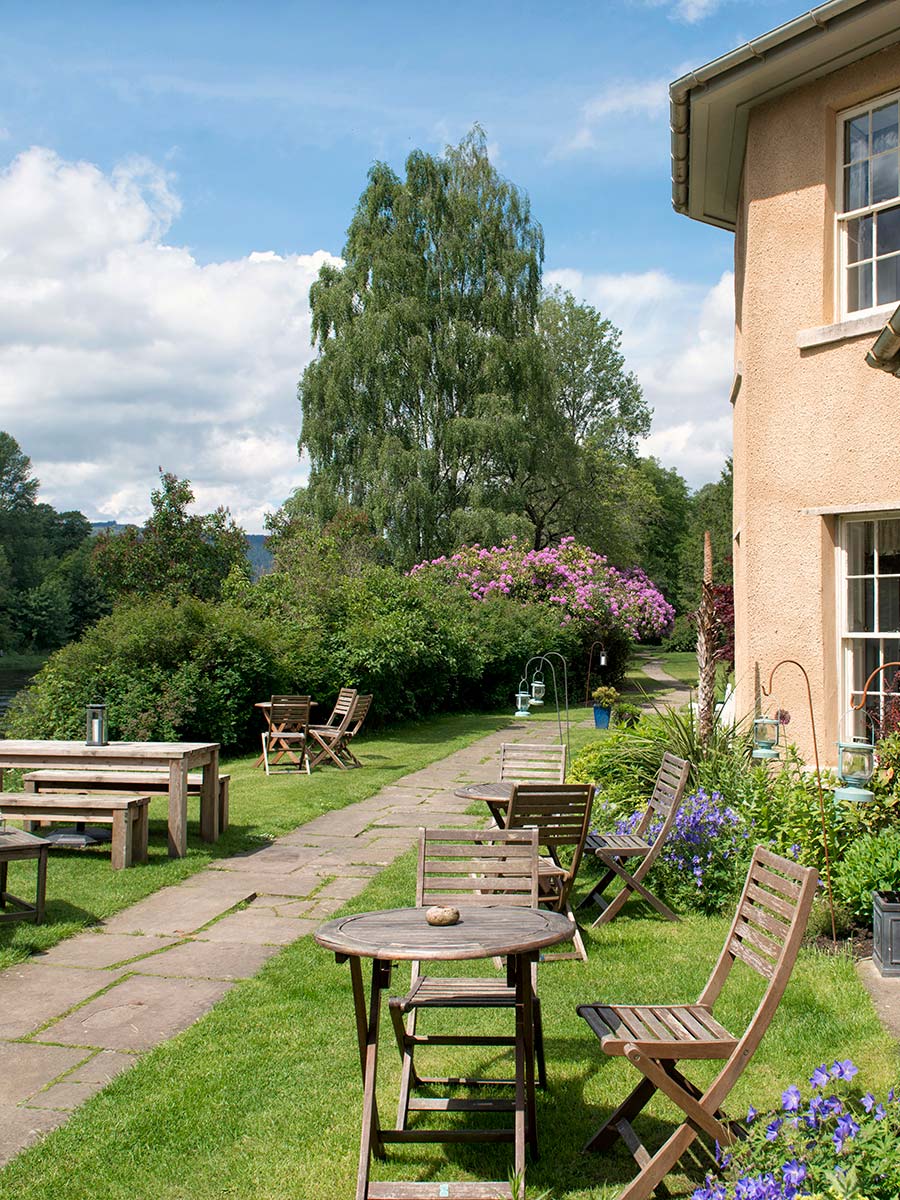
Eastwood’s magical, south facing gardens stretch out along the north bank of the River Tay downstream of Dunkeld’s beautiful Telford Bridge. The garden with a hidden folly sits alongside woodlands with lovely specimen trees, rhododendrons and azaleas – many of them several hundreds years old. They are a haven of beauty and tranquillity. Besides a wide range of birds, butterflies and insects there are resident deer, tawny owls, kingfishers, red squirrels and the famous rabbits. By some luck you can also see osprey’s fishing in the river.